Life at Samyama
Before You Book a Venue, You're Already Picturing It
4 November 2026 · Samyama Team
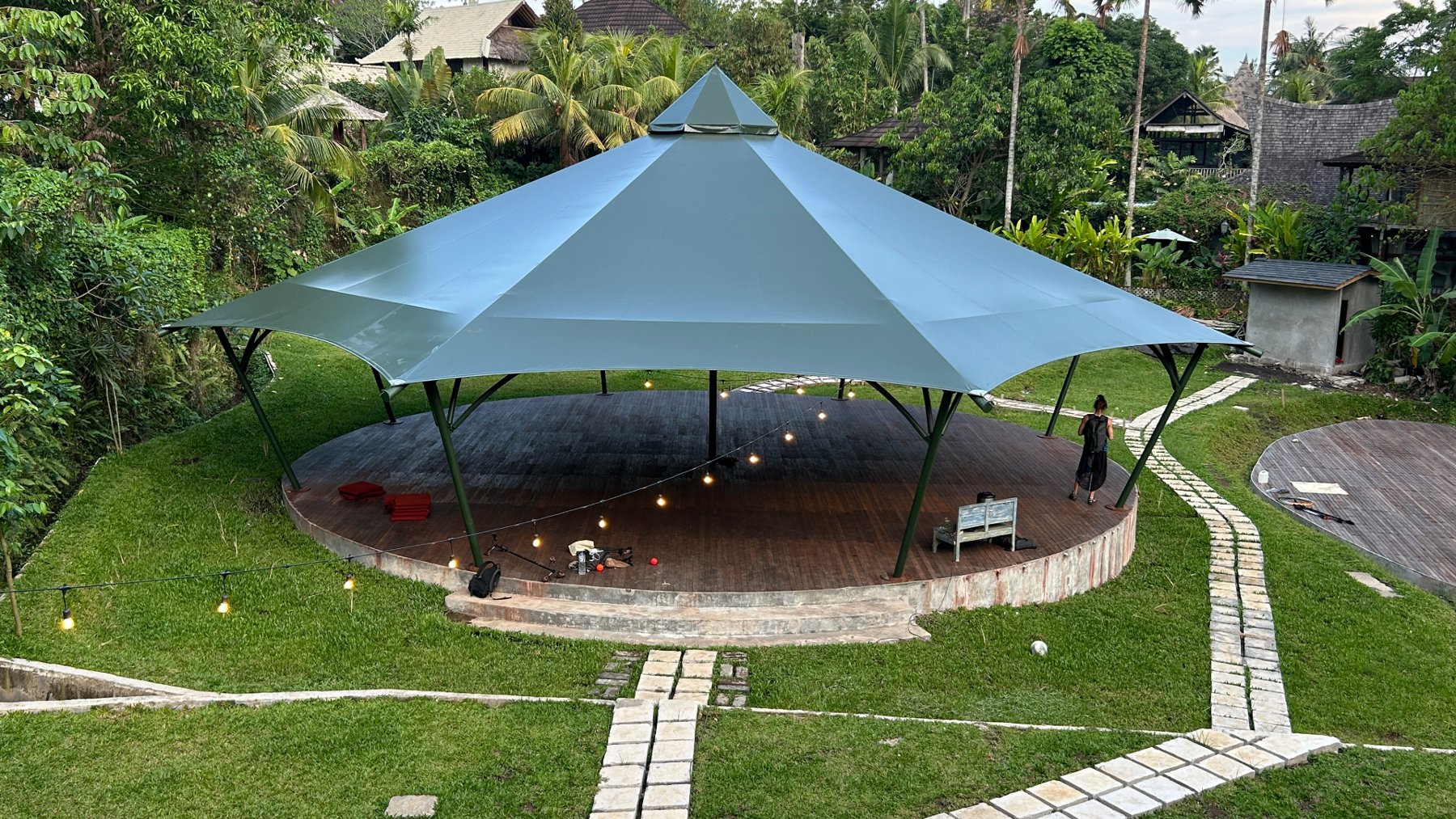
A facilitator begins with an intention. Something you want people to experience, explore, or learn together: a retreat, a training, or simply a gathering built around a specific kind of transformation. That part usually comes first, and it comes easily. It's the why.
And as the idea takes shape, you start imagining the setting.
Not the logistics yet. Just the feeling. What should it feel like to arrive? Is it the kind of space that asks people to slow down the moment they step through the gate, or one that energises them for what's ahead? Where could the group practise? Indoors, protected from the heat, or outdoors, closer to the elements the work is actually about? Where would people gather between sessions?
And just as important: where could someone slip away, alone, for a quiet break, without it feeling like they're missing something?
What you're really weighing
Underneath that picture, a facilitator is quietly running through a few questions. They're worth asking out loud before you ever contact a venue.
1. What does the arrival need to do?
The first few minutes can shape how people feel about the experience ahead. A group arriving frazzled from travel needs somewhere to land. A group that needs to lift out of the everyday may need a different kind of welcome. Decide what matters before you look at photos.
2. What does the practice itself demand?
- Floor: Can people lie down, move, or sit for long periods?
- Weather: If the heat or rain turns, do you have a real indoor option, or a compromise?
- Sound: Will you hear a neighbouring group, a generator, or a road?
- Flexibility: Can the room hold circles, rows, and open movement without a rebuild between sessions?
3. Where does the real work happen?
Often it's not in the sessions. It's in the meals, the walk back, the quiet fifteen minutes when something lands. Ask where people will gather unscheduled, and whether that space invites conversation or only tolerates it.
4. Where can someone step away?
Every group has someone who needs to leave the room without leaving the retreat. If the only options are "stay" or "go back to your room," people either push through or disappear. A quiet corner lets them return.
5. What will your participants need that you won't think of?
Getting there, rest, dietary needs, accessibility, and spotty phone signal all shape how people experience your programme, and they rarely surface until someone is already struggling.
6. How much of your attention will the venue consume?
This is the question most facilitators skip. Every hour spent chasing invoices, confirming setups, or relaying messages is an hour not spent holding the room. A venue should reduce your load, not add to it.
Starting with the gathering, not the venue
At Samyama, that's the starting conversation. We begin with what you're building and explore how the space might support it.
Practice spaces that can hold both structure and stillness. Gathering areas for the in-between moments, not just the scheduled ones. Quiet corners for people who need to step away and come back. And a conversation about the practical details that can make all the difference to the experience.
What does your gathering need to feel like, the moment people arrive?
That answer is where the right venue starts.