Foundations
What Forgotten Island Teaches Us About Befriending Our Shadow
17 October 2026 · Andy
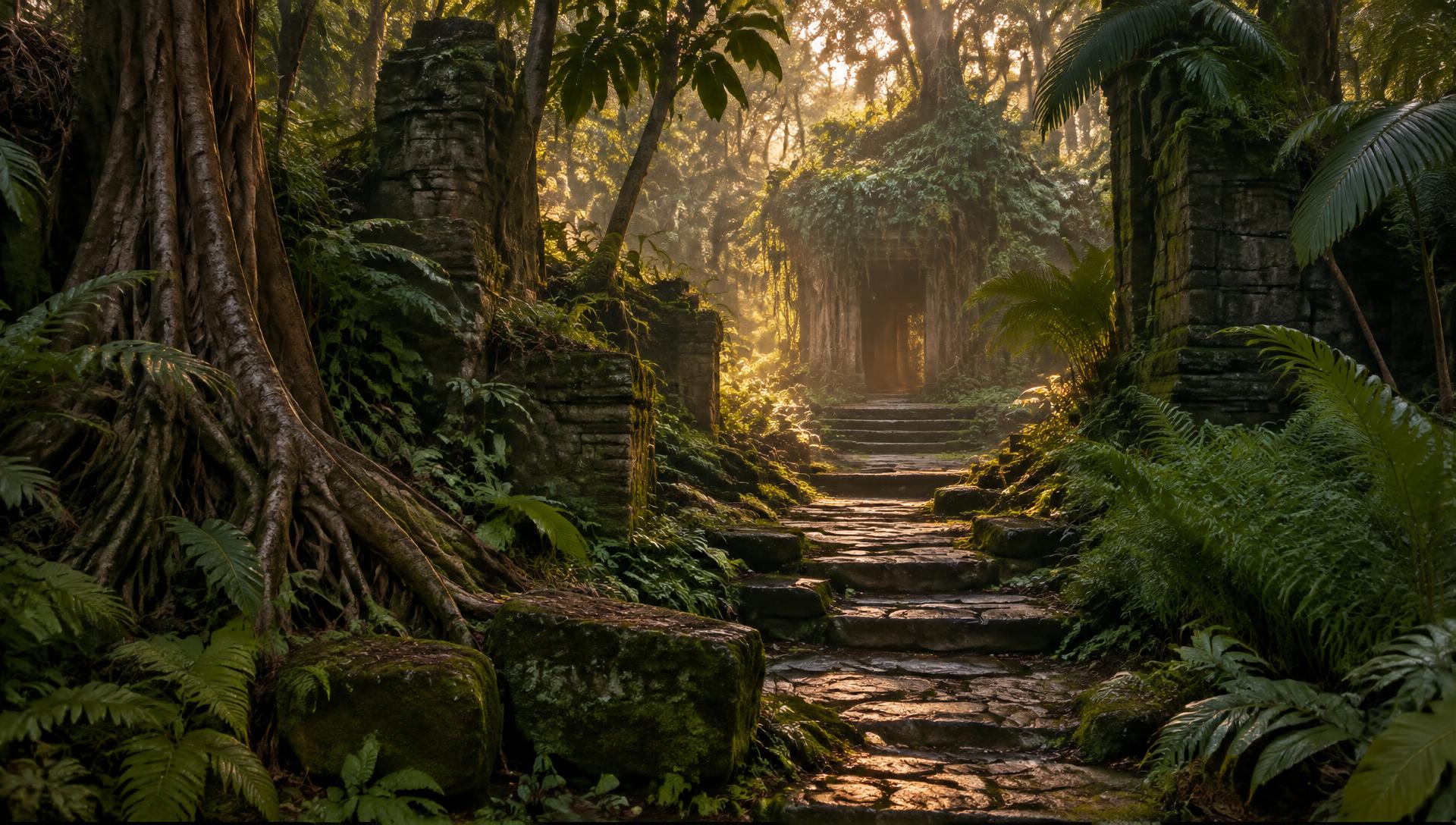
The deeper meaning of Forgotten Island can be found in the parts of ourselves we've pushed away. Read through the lens of shadow work, the island of Nakali becomes a metaphor for the unconscious, and its folklore creatures resemble frightened parts of the psyche waiting to be heard.
Most of us treat the difficult parts of ourselves like monsters. The anger, the neediness, the critic in our head, the part that clings too tightly. We try to fight them, hide them, or get rid of them altogether.
I went to see DreamWorks' Forgotten Island expecting a fun animated movie, and walked out realising it was quietly teaching a completely different approach. Not how to defeat your monsters, but how to befriend them.
The story follows two best friends, Jo and Raissa, on their last night together before Raissa leaves the Philippines for college in the US. A magic sand dollar drops them onto Nakali, an island full of creatures from Filipino folklore, where the longer you stay, the more you forget. To get home, they risk losing every memory of their friendship.
(Fair warning: spoilers ahead.)
What the creatures in Forgotten Island really represent
Think about the name for a second: a forgotten island, the place where everything we forget ends up. It's a compelling metaphor for what Jung described as the shadow. The parts of us that weren't welcome growing up don't necessarily disappear. We just stop visiting them, and they wait somewhere out of sight.
The creatures waiting on Nakali are the ones many Filipinos grew up being scared of. But the film gives each of them a surprisingly human fear. The tiyanak is a mama's boy, nervous about leaving home for the first time. The manananggal is paranoid and spiralling, hearing voices she can't turn off. There's a weredog who is convinced he's a bad dog, a merman who hides behind his vanity because he's afraid he's shallow, and a memory demon named Batiba who is so frightened of the outside world that she lives off other people's memories.
It's hard not to recognise a few of those voices in your own head. And that's the point. Rather than being simply monsters to defeat, these creatures can be understood as parts that got stuck, each one frozen in front of something it's afraid to face.
Turning toward the one we fear most
Most of the creatures on Nakali end up as unlikely companions. The one Jo and Raissa run from is the manananggal. She hunts them across the island, and for most of the film she's exactly what we picture when we think of our shadow: something terrifying that has to be escaped.
But the story turns when we learn who she really is. The manananggal is tormented because someone stole one of her memories. Once that memory is returned to her, the rage drains out of her and she finds peace.
There's an important idea here for shadow work. The parts that frighten us most may be guarding a story no one ever listened to. The explosive anger, the anxious spiral, the critic that never lets up: sometimes there's an old experience underneath that was ignored, pushed away, or never fully understood. When we stop fighting these parts and become curious about them, something in our relationship with them can begin to change.
Giving a part what it actually needs
Listening is the beginning, but the film goes a step further. It shows that each part needs something different in order to change.
The weredog doesn't heal because someone tells him he's a good dog. He heals when he learns to control his transformation. What he needed wasn't reassurance, it was mastery over his own power.
Batiba, the memory demon, is even more striking. She steals memories because she's too afraid to leave her cave and make any of her own. Nobody punishes her for it. Instead, Jo gives her a pair of shoes, a simple and almost funny gift that says: here is a way to step outside.
What makes that moment land is that Jo has been living out her own version of Batiba's fear. Terrified that Raissa leaving will mean losing her, Jo secretly hides the sand dollar that could take them home. She's trying to hold on to someone else's life because she's scared of building her own. So when she hands Batiba those shoes, she's also giving herself permission to let go.
That's one way to understand integration. We begin to recognise what a part of ourselves might need, and in responding differently to it, something in us begins to shift.
Going back for the part you left behind
Jo and Raissa are a lesson in their own right. Raissa has always been the good student, praised for being smart and careful. Jo is the loud, imaginative troublemaker. Each one carries what the other was never allowed to be. In shadow work, we call this the golden shadow: the brave, creative, brilliant qualities we can only see in someone else because we haven't yet claimed them in ourselves.
Near the end, Jo sacrifices her memories so Raissa can escape. But Raissa doesn't just go home and move on. She goes back. She walks through Jo's fading memories, all the way back to their childhood, and admits that Jo helped make her who she is.
That is what befriending a part can look like. Not a one-time breakthrough, but a decision to return for what we left behind, even when it would be easier to keep walking.
And Jo, once she's found again, grows up to become a graphic novelist who turns the whole adventure into a book. The creative fire she'd been pouring into her friendship finally becomes her own.
Forgotten Island's ending, explained
My favourite detail comes in the final scene. Jo and Raissa's friendship bracelets can reopen the portal to Nakali whenever they want, and they choose to go back. The island isn't sealed off and forgotten again. It becomes a place they can visit.
That's the heart of developing a relationship with your shadow. It isn't something you fix once and file away. It's an ongoing friendship with the parts of you that live out of sight, one you keep returning to with curiosity instead of fear.
So if you watch the film, I'd invite you to go a little deeper than asking which character you are. Ask which parts of each character live inside you. Maybe you'll recognise the critic who never stops talking, the child who's scared to leave home, the instinct you were taught was bad, the polished self that worries there's nothing underneath, the part that lives through other people, or the gold you've only ever seen in someone else.
We all have a forgotten island. Most of us just never get the chance to visit it.