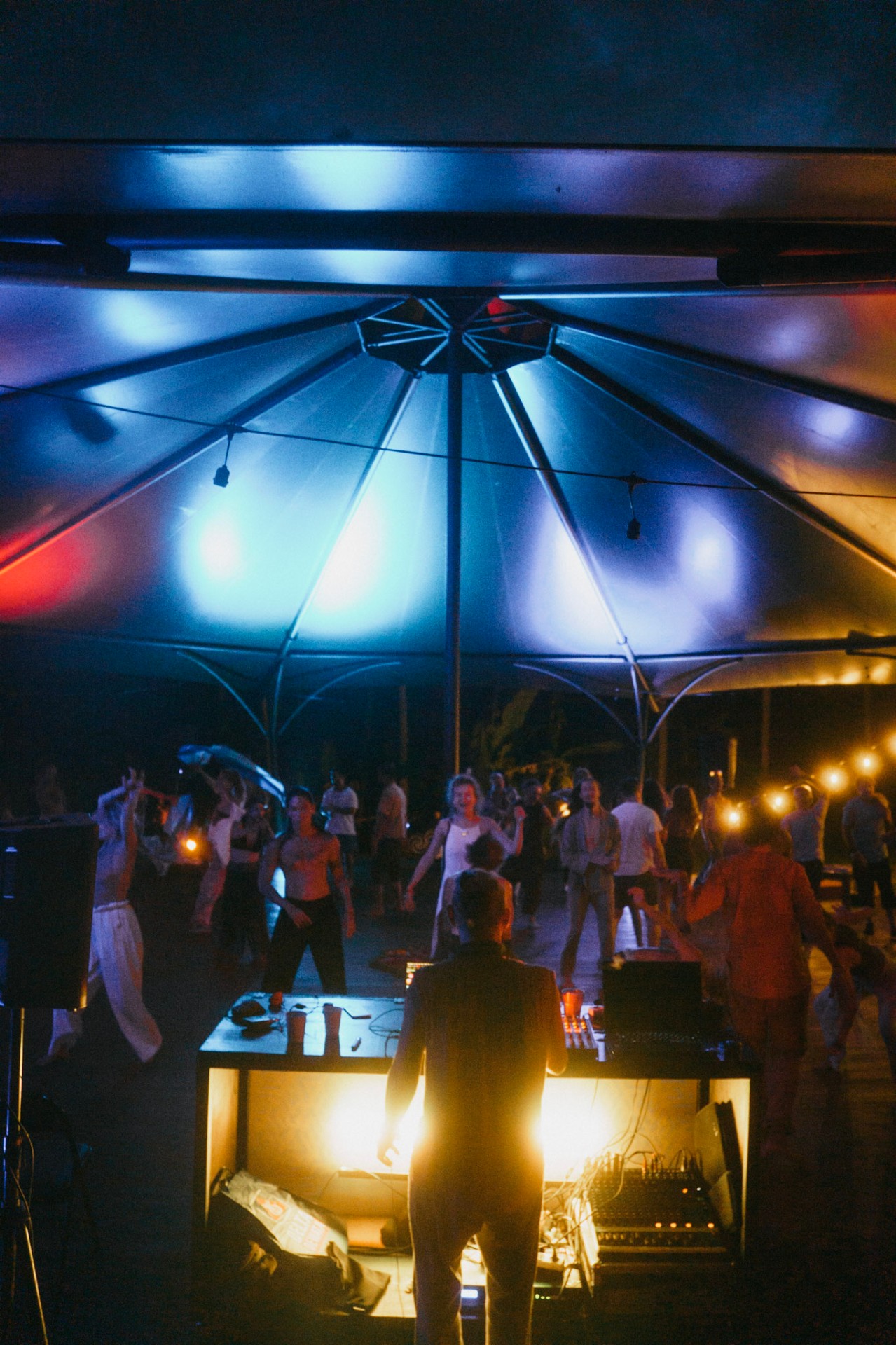
You're standing on a dance floor, the music is playing, and people around you seem completely comfortable moving their bodies. Some are dancing with their eyes closed, others are smiling, and a few seem entirely lost in the rhythm. You want to join them, but something is holding you back. You wonder whether anyone is watching, whether your movements look ridiculous, or whether you're simply not a very good dancer.
Perhaps you notice someone attractive across the room, and suddenly there's another layer of uncertainty. Should you smile? Make eye contact? Move a little closer? What if they misunderstand, or worse, reject you? Before you've really started dancing, your mind has already created a dozen reasons to feel uncomfortable.
It's a strange thing when you think about it. Music and movement are among the simplest forms of human expression, yet somewhere along the way many of us have learned to feel that dancing is something we can be good or bad at. Instead of enjoying the experience, we become preoccupied with how we might appear to everyone else.
When Dancing Becomes a Performance
For many of us, the difficulty isn't actually moving our bodies. It's the feeling of being observed. Even when nobody is paying us particular attention, we can become intensely aware of ourselves, checking how we look, comparing our movements with others and wondering whether we're doing something wrong.
We may have carried this self-consciousness for years. Perhaps someone laughed at us when we were younger, we felt embarrassed at a party, or we simply grew up believing that some people are natural dancers and others aren't. Over time, these experiences and assumptions can become familiar stories about ourselves. We decide we're awkward, uncoordinated or not the sort of person who dances.
There's an interesting contradiction here. We often imagine that being a good dancer will give us the confidence to enjoy dancing, but sometimes it's our preoccupation with being good that prevents us from enjoying it in the first place.
What might happen if there were no steps to learn, no performance to perfect and nobody to impress?
What Makes Ecstatic Dance Different?
Ecstatic dance offers an unusual answer to that question. Rather than following choreography or trying to move in a particular style, participants are invited to explore movement freely, allowing the music and their own experience to guide them.
There are usually some simple principles that help create this environment. Dancing is generally barefoot, conversation is set aside on the dance floor, and alcohol and recreational drugs are not part of the experience. Personal boundaries are respected, and any interaction with another person should be welcomed by both people rather than assumed.
These aren't simply rules for the sake of rules. They help create a space where dancing doesn't have to be about social performance, attracting attention or meeting someone else's expectations.
For someone attending for the first time, though, freedom can feel surprisingly uncomfortable. When nobody tells us how to move, we're left to discover what movement feels natural to us. And that can bring us face to face with the very self-consciousness we hoped to escape.
The Noise We Bring Onto the Dance Floor
Sometimes the most distracting thing on a dance floor isn't the music or the people around us. It's everything happening inside our own heads.
We might still be thinking about a difficult day at work, an uncomfortable conversation or something that happened years ago. Alongside those thoughts, there may be the familiar inner commentary about not being attractive enough, confident enough or good enough. Even while our bodies are moving, our attention can remain caught up in old concerns and imagined judgements.
This is where ecstatic dance can have something in common with meditation. In meditation, we might notice our thoughts wandering and gently return our attention to the breath. On the dance floor, the music and the sensations of movement can offer a similar point of return.
The intention isn't necessarily to stop thinking or to force ourselves into a particular emotional state. It's to notice when we've become caught in our thoughts and discover whether we can return to the experience happening now.
We might begin by feeling the rhythm through our feet, noticing how our shoulders want to move, or allowing a particular piece of music to influence the pace of our movement. Sometimes we feel joyful and energetic. At other times we might feel awkward, distracted, tired or emotional. All of these experiences can belong on the dance floor.
And gradually, we may find ourselves spending a little less time thinking about dancing and a little more time actually dancing.
When the Body Begins to Find Its Own Way
Something interesting can happen when we repeatedly give ourselves permission to move without judgement. Movements that once felt forced can begin to feel more spontaneous, and we may discover that our bodies have their own natural responses to rhythm and sound.
This doesn't necessarily happen in a single session. For some people, it develops over weeks or months of returning to the dance floor, becoming familiar with the environment and gradually feeling more comfortable being seen.
Perhaps at first we barely move, keeping our arms close to our bodies and watching what everyone else is doing. Later, we might become comfortable closing our eyes, moving more freely or allowing the music to take us somewhere unexpected. What changes isn't necessarily our technical ability to dance. It's our relationship with the experience.
There may be moments when we realise we haven't thought about how we look for several minutes. We're no longer carefully managing each movement or comparing ourselves with the person beside us. We're simply listening and responding.
Perhaps the freedom in ecstatic dance isn't about learning how to dance. It's about gradually forgetting that we thought we had to dance well in the first place.
Feeling Connected Without Needing Anything
One of the more surprising aspects of ecstatic dance is that becoming less concerned about other people doesn't necessarily mean feeling less connected to them.
As our attention moves away from worrying about how we're being perceived, we may become more aware of the shared experience around us. The rhythm of the music, the movement of the group and the sense of people enjoying their own expression can create a feeling of connection without anyone needing to say a word.
Sometimes that connection is as simple as a smile or a moment of eye contact. At first, even these small interactions can feel complicated. We might worry about being rejected, misunderstood or expected to respond in a particular way. We might also find ourselves assuming that someone else's attention means more than it does.
But one of the freedoms of a respectful dance environment is discovering that connection doesn't have to lead anywhere. A smile can simply be a smile, and a moment of eye contact can be enjoyed without becoming an invitation or an expectation. If we want to dance with someone, we can offer an invitation while remaining attentive to their response, accepting that they are equally free to decline.
For some people, becoming comfortable with those small moments of connection and uncertainty can be as meaningful as becoming comfortable with movement itself. We can enjoy sharing a space with others without needing their approval, attention or affection.
And perhaps that allows us to feel more connected, not less.
Learning to Dance for Ourselves
There's no requirement to arrive at ecstatic dance feeling confident, expressive or entirely free of self-consciousness. You don't need to be an experienced dancer, and you certainly don't need to move like anyone else.
Some evenings you may feel completely immersed in the music. On others, your mind might be busy, your body might feel reluctant to move, or you might spend much of the session quietly finding your feet. None of those experiences represents failure.
What matters is the opportunity to explore your relationship with movement without having to make it into a performance. Over time, you might begin to recognise familiar thoughts about being judged or not being good enough, while discovering that you don't always have to listen to them.
And something about that possibility extends beyond dancing. How often do we hold ourselves back because we're afraid of looking foolish? How many experiences do we approach with the belief that we need to be good at them before we're allowed to enjoy them?
Perhaps dancing gives us a small opportunity to question those assumptions, not through analysing them endlessly, but through the simple experience of moving anyway.
The next time you find yourself standing at the edge of a dance floor, wondering whether you're good enough to join in, perhaps you could try a different question. What would happen if, just for this one song, you didn't need to be good at dancing at all?
What if you simply listened to the music, noticed how your body wanted to move, and allowed that to be enough?