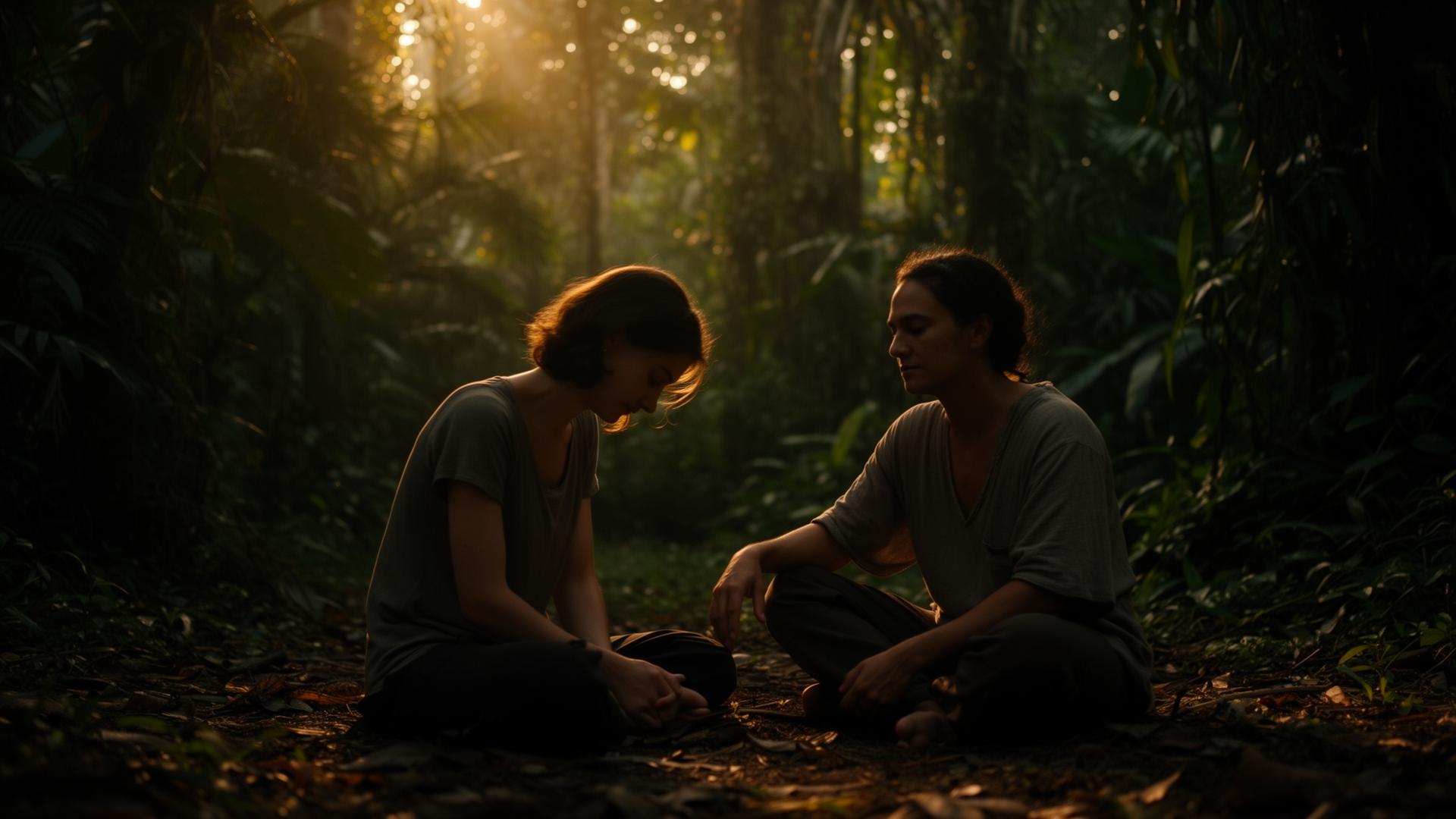
Areas of Exploration
Shadow & Emotional Patterns
Meeting what has quietly shaped how we live.
Most of us carry patterns we did not choose. Reactions that arrive too quickly, emotional weather that returns no matter how the circumstances change, habits that we have outgrown but cannot quite put down. These are not signs of failure. They are the residue of experiences that were never fully met.
Shadow work, in the way it is held at Samyama, is the practice of turning towards those parts of ourselves with honesty and care. Not to fix them. Not to perform insight. Simply to see them, to feel them, and to allow what has been compressed to begin to move.
What we mean by shadow
Shadow is not a dramatic concept. It refers to the parts of ourselves we have learned to look away from. Feelings we were taught were not acceptable. Needs that went unmet. Memories that were too much at the time, and so were stored rather than processed.
These parts do not disappear because we ignore them. They tend to express themselves indirectly, through reactivity, withdrawal, compulsive patterns, or a quiet sense that something is in the way. Shadow work simply gives those parts somewhere honest to be met.

Pattern, not pathology
Much of what we treat as a personal flaw is actually a pattern. A learned response to something that, at the time, made sense. Recognising the pattern, rather than identifying with it, changes the relationship entirely.
In group and private settings, the work moves slowly enough to actually see the pattern at work, in the body, in the breath, in the way you speak about a particular subject. From there, something other than the old response becomes possible.
The body remembers
Emotional history is not stored only as memory. It is held in posture, breath, tension, gesture. This is why purely cognitive approaches to inner work often go so far and no further.
The shadow practices at Samyama include embodied and somatic elements precisely for this reason. Movement, breathwork and structured group processes give the held material a way to surface and move, rather than only being talked about.
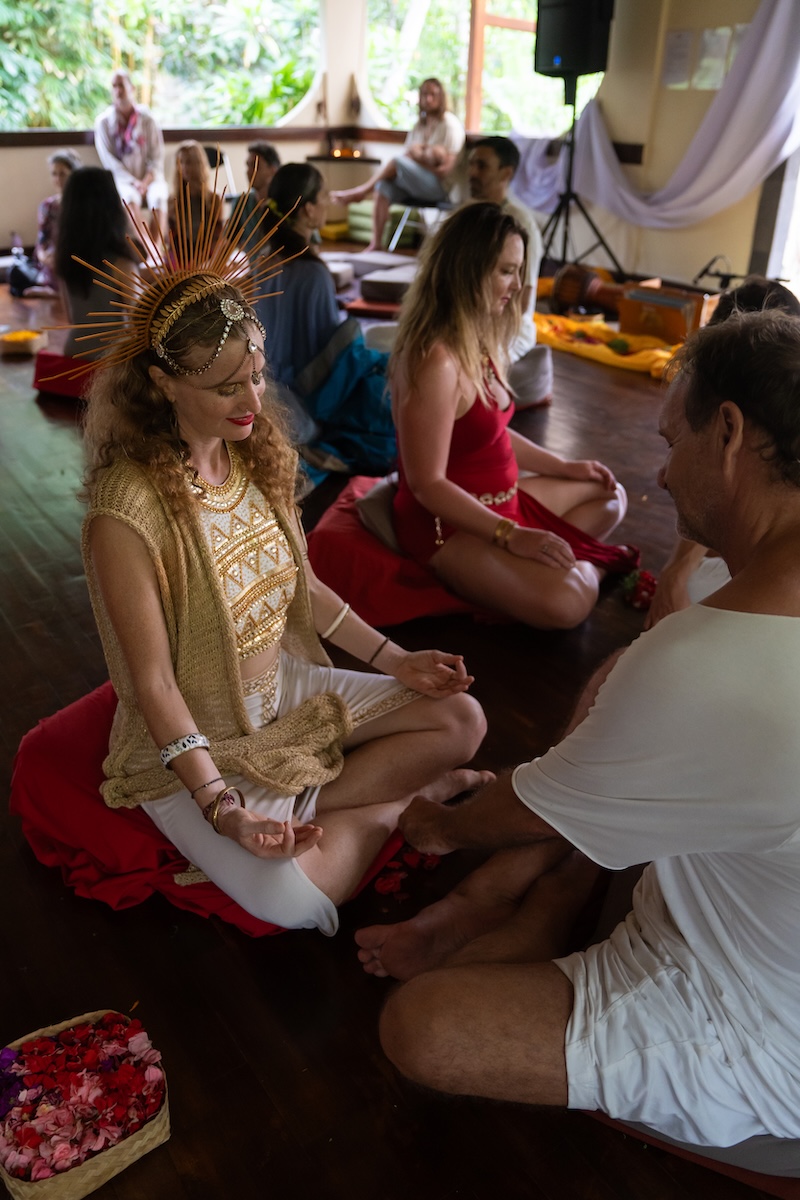
Compulsion, addiction and what lies beneath
Some of the most difficult patterns we carry are the ones we use to manage what we cannot yet feel. Compulsive behaviour, addiction in its many forms, and the quieter strategies most of us rely on, all serve a similar function.
Meeting these honestly is not about willpower. It is about understanding what is being managed, and beginning to develop the inner resources to be with that directly. The work is patient, it is held with care, and it goes only as far and as fast as is actually safe.
Where this work lives at Samyama
A few of the practices and containers most often connected to this theme.
Shadow Work Retreat
A four-day residential exploring unconscious patterns and relational dynamics.
Introduction to the Shadow of Addiction
A three-hour experiential workshop introducing addiction and compulsive behaviour.
Shadow of Addiction Retreat
A three-day immersion into the deeper patterns beneath compulsive behaviour.
Shadow Work — Private Pathway
For individuals, couples or close family groups.
Continue exploring
The themes connect. One often opens into another.