Something quietly remarkable is happening.
Millions of people are no longer using AI simply to answer questions or write emails. They are using it to think. Conversations that begin with work or productivity often drift towards relationships, purpose, grief, childhood experiences or the feeling that life has somehow become disconnected from itself. What started as a technological tool has, for many, become a place for honest self-reflection.
It is not difficult to understand why. An AI can listen without becoming tired or distracted. It remembers previous conversations, notices recurring themes and can gently challenge assumptions that have gone unquestioned for years. For many people, it has become easier to say difficult things to an AI than to another person. In doing so, they often discover thoughts and feelings they had never fully expressed before.
At Samyama, we find this genuinely exciting rather than concerning. We have explored these tools ourselves and recognise the value they can bring. Used thoughtfully, AI can become an extraordinary companion for self-inquiry. It encourages reflection, helps organise complexity and often gives people the confidence to look more honestly at their own lives.
What interests us most, however, is what tends to happen next.
When the Questions Begin to Change
After enough conversations, many people reach a point where the questions begin to change. The patterns are no longer hidden. Old stories become familiar. There is less need for another explanation because the understanding is already there. A different question gradually emerges. If I can now see myself more clearly, how do I begin living differently?

This is where understanding meets its natural boundary. We can often explain why we react in certain ways long before those reactions begin to soften. We can recognise old habits, understand our fears and even identify what needs to change, yet still feel as though something essential has not quite shifted. Insight has opened the door, but it has not yet carried us across the threshold.
The Ways Human Beings Actually Learn
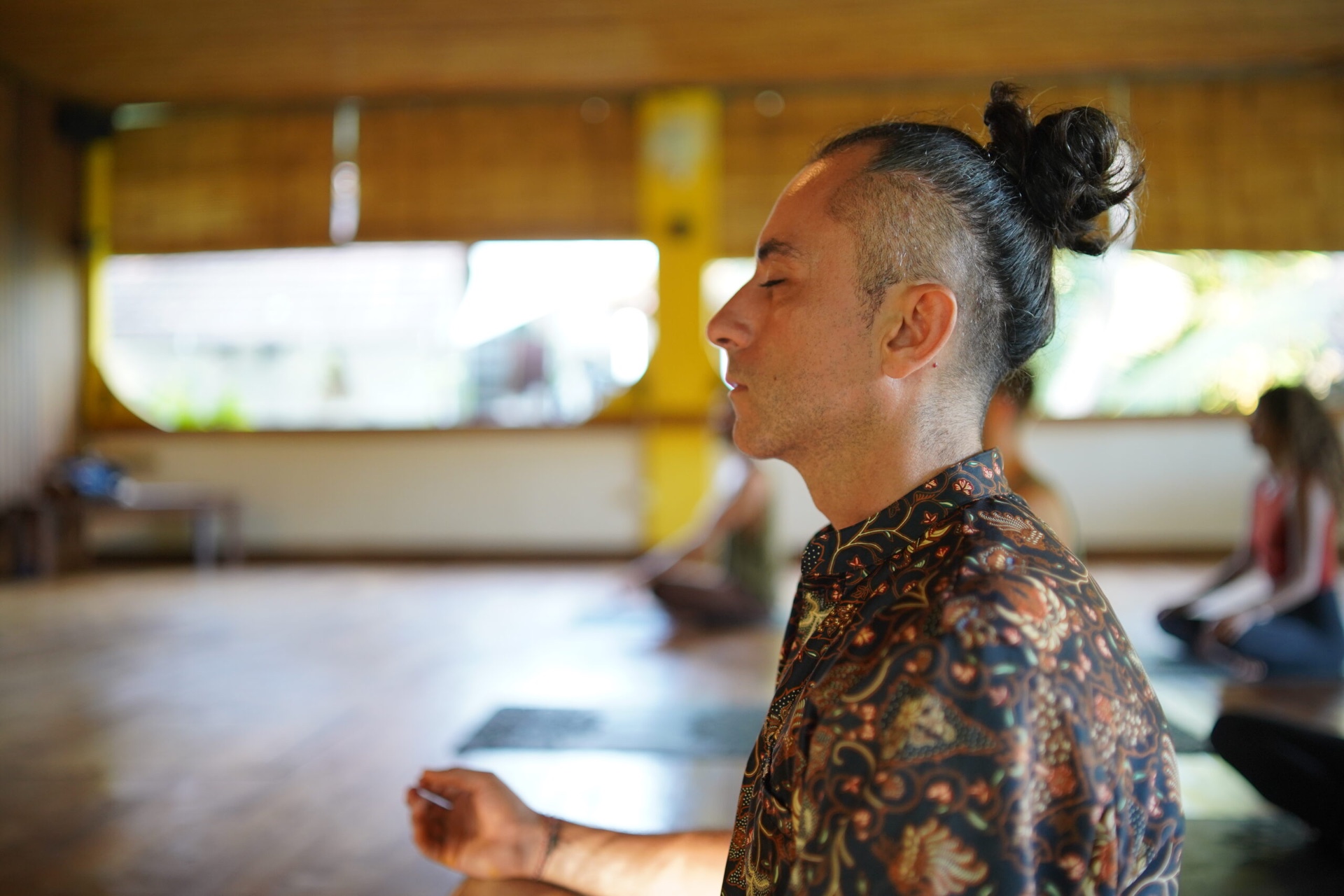
Human beings have always learned in more than one way. We learn through conversation and reflection, but we also learn through experience. Our bodies, our relationships and our surroundings shape us just as profoundly as our thoughts. A period of genuine silence, a consistent meditation practice, meaningful connection with other people, movement, music, nourishing food, deep rest and time spent in nature all affect us in ways that are difficult to reduce to language alone.
For thousands of years, cultures across the world developed practices that recognised this simple truth. Yoga, meditation, contemplation, ritual, storytelling and community were never intended merely to give people new ideas. They created conditions in which understanding could become something lived. Long before modern psychology or artificial intelligence, people were discovering that lasting change often comes when insight is supported by experience.
Where AI May Make Its Greatest Contribution
Perhaps this is where AI will make one of its greatest contributions. Not by replacing ancient human practices, but by helping more people arrive at them. Someone who has spent months exploring their inner world with an AI companion may eventually discover that they are no longer searching for better answers. They are searching for an experience that allows those answers to become real.
That is why places like Samyama continue to matter. Not because they offer a different conversation, but because they offer a different environment. Here, reflection is joined by meditation, movement, community, nature and the quiet rhythms of daily life. The beauty of Bali, the generosity of shared practice and the accumulated wisdom of traditions that have evolved over thousands of years become part of the process. Understanding is no longer something we carry only in our minds. It begins to find its way into the whole of our lives.
A Meeting Place Between the Two
The future of personal growth may not be a choice between technology and ancient wisdom. It may be a meeting place between the two. AI is already helping millions of people understand themselves with greater clarity than ever before. The next step, for many, may simply be discovering that some parts of being human can only be understood by living them.