Areas of Exploration
Stress, Burnout & Modern Life
What becomes visible when the noise quietens.
Stress is not always loud. For many people it has become the background hum of a life that simply does not stop. Work, screens, obligations, scrolling, the constant low-grade need to respond. By the time it shows up as burnout, it has usually been building quietly for a long time.
The work at Samyama does not try to talk you out of any of this. It offers a different set of conditions. Time without input. A nervous system that is no longer being asked to perform. The slow recognition of what your ordinary rhythm has been costing you, and what becomes possible when that rhythm changes.
What constant stimulation covers
It is difficult to see clearly when you are constantly reacting. The mind has too much to manage, the body is held in low-level alert, and the inner cues that would normally guide you are drowned out by everything coming in.
Many people describe a kind of quiet shock in the first day or two at Samyama, as the system begins to register how loud the rest of their life has been. Underneath that is often a surprising amount of grief, or tenderness, or fatigue that had nowhere to go. None of this is a problem. It is information.
Allowing the nervous system to settle
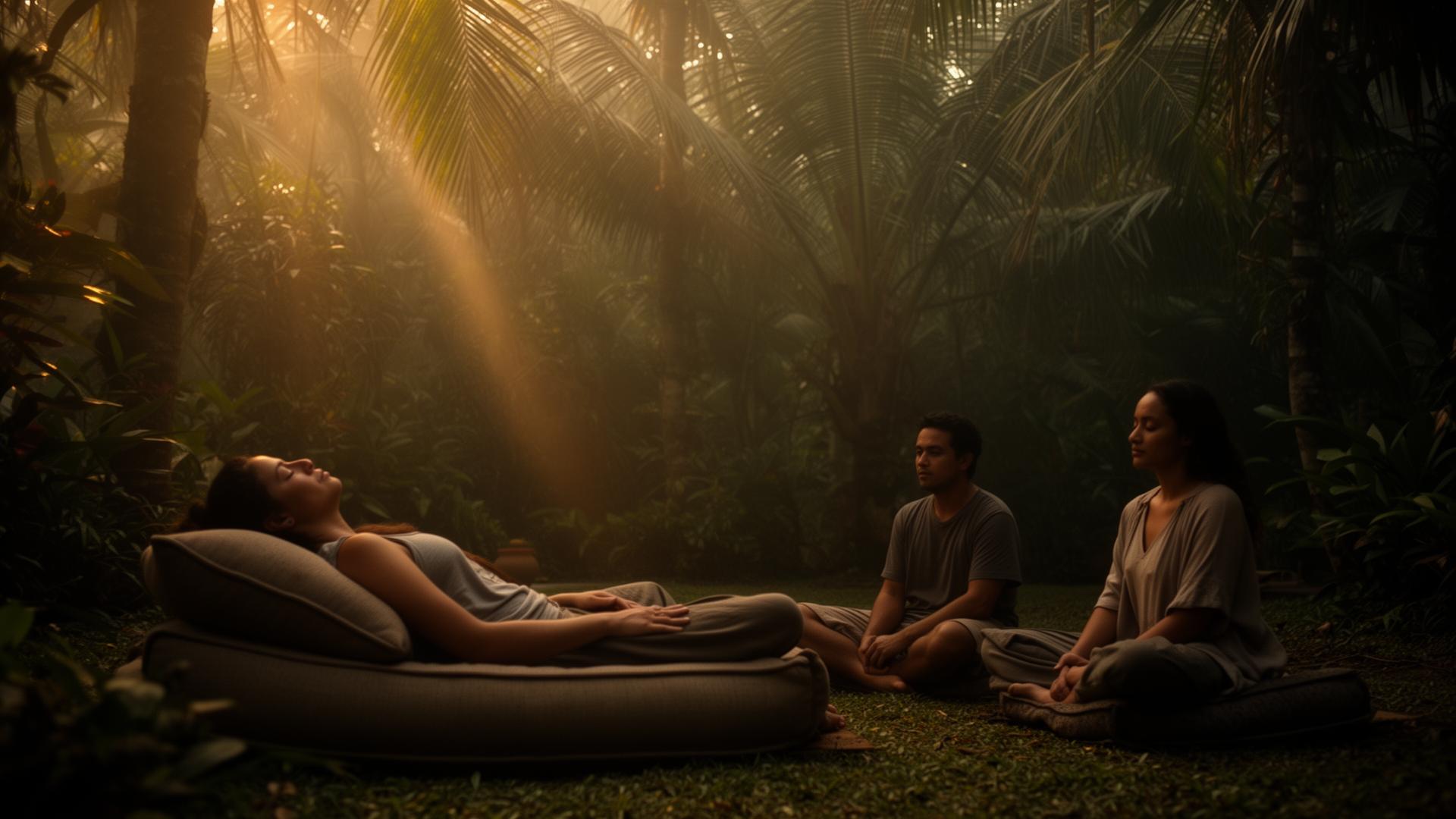
Real rest is not the same as not working. It is the body trusting that it is safe enough to stop bracing. That happens through conditions more than through technique. Quiet land. Considered spaces. Unhurried days. Practice that does not demand performance.
Meditation, yoga and contemplative time at Samyama are offered in a way that supports this settling rather than overriding it. The instruction, in many sessions, is simply to allow the system to do what it already wants to do, given the chance.
The role of place
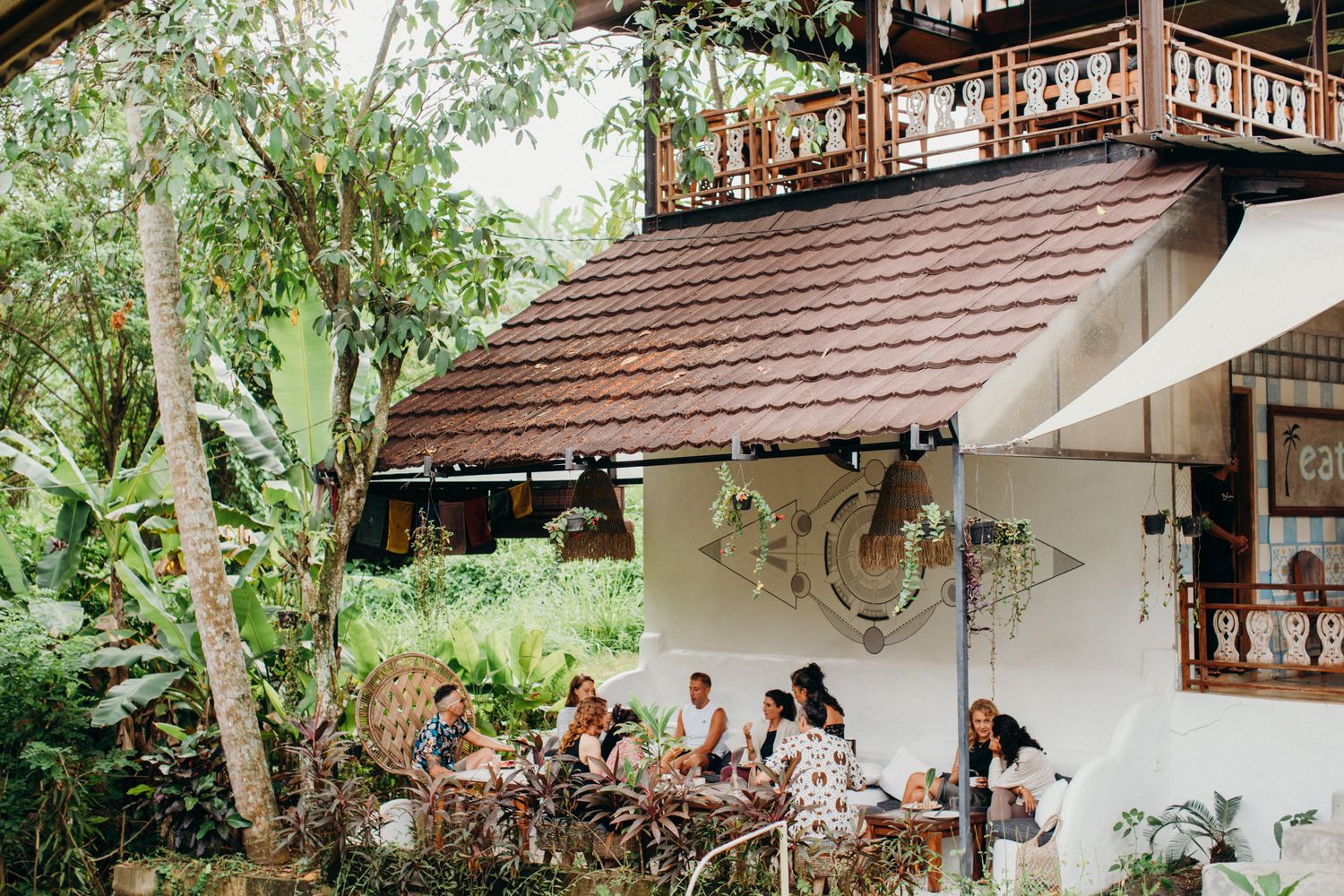
The centre sits in a quiet valley on the edge of Ubud, far enough from town to allow genuine stillness. Humidity, birdsong, the slow movement of the day, the rice terraces, the canopy. All of this begins to settle the nervous system long before any practice begins.
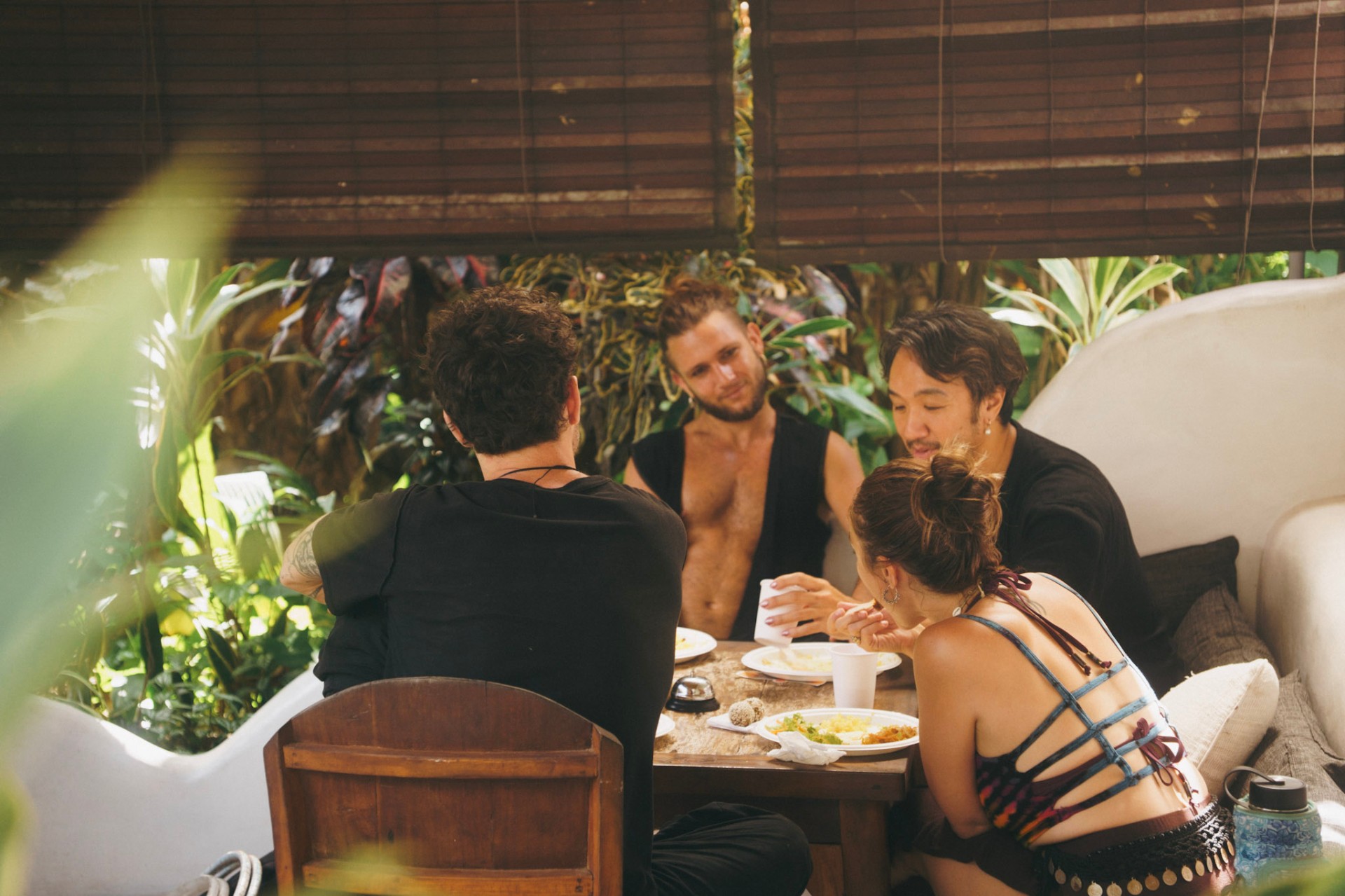
Meals are plant-based, locally sourced and prepared with care, and they are eaten slowly. Some of the most meaningful integration happens here, in the spaces between sessions, in the unhurried hours when nothing in particular is being asked of you.
Going home differently
The aim is not to convert your life into a retreat. It is to return to it with a clearer sense of what has been costing you, and a steadier capacity to meet that with honesty.
Many people find that small, durable changes begin to feel possible. Less compulsive checking. More honest rest. A quieter no, and a clearer yes. The deeper work of stress and burnout is rarely about doing less for the sake of it. It is about no longer abandoning yourself in the middle of a life that is asking too much.
Where this work lives at Samyama
A few of the practices and containers most often connected to this theme.
Continue exploring
The themes connect. One often opens into another.