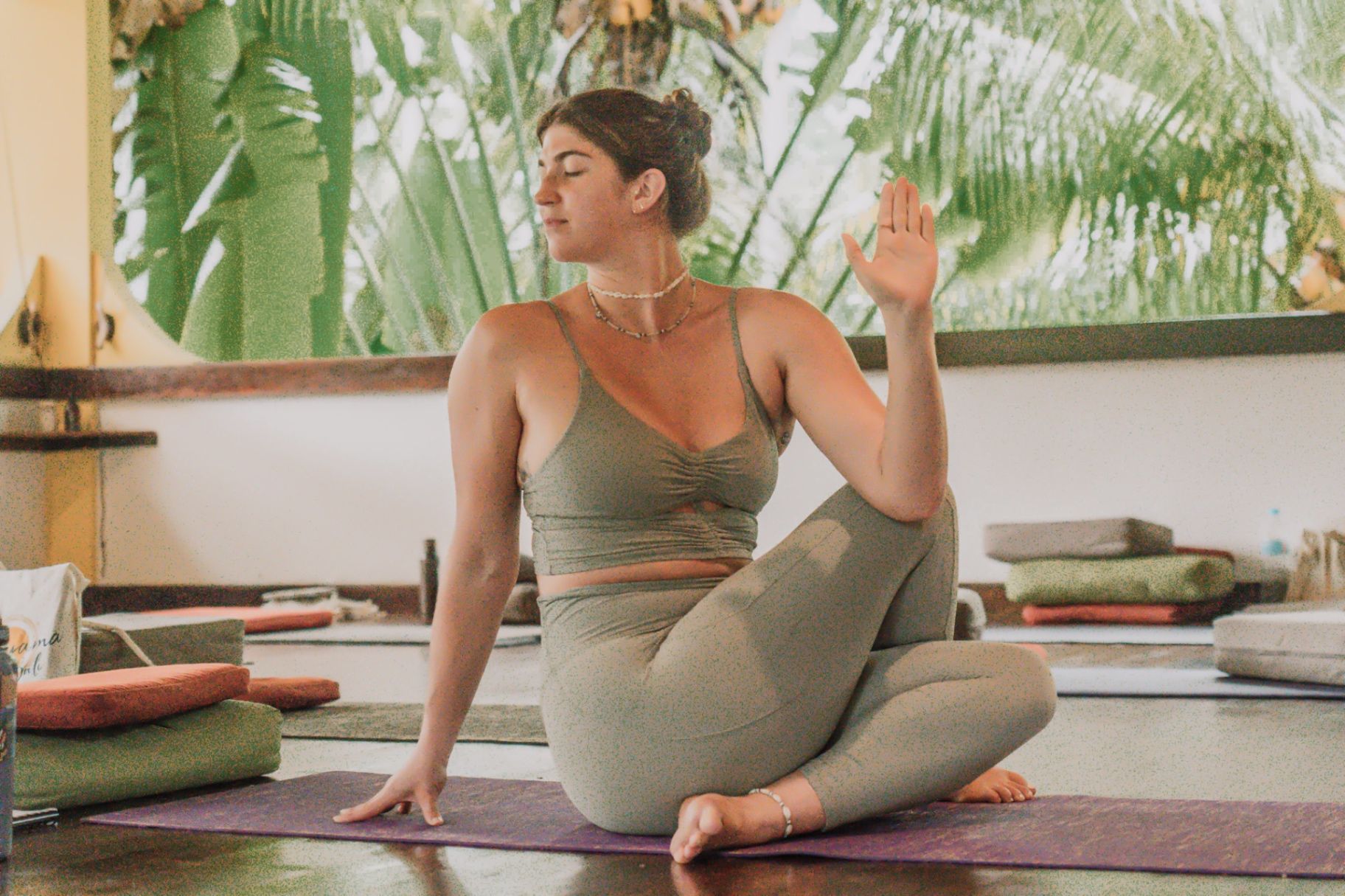
Most people arrive at yoga teacher training with a clear intention — to deepen their practice, to learn to teach, or to step away from the noise of daily life. What they rarely anticipate is how thoroughly the process will rearrange them.
Am I ready?
Am I experienced enough?
These questions are not obstacles — they are the first encounter with the work. Committing despite uncertainty is where the practice begins.
The early days are a blend of excitement and vulnerability. A room full of strangers, each carrying their own story. Faculty who have walked the path for decades, now holding space for others to find their footing. The curriculum is outlined — asana, anatomy, philosophy, pranayama, teaching methodology — but the real syllabus is unwritten.
Asana practice deepens quickly. Alignment is studied not as rigid instruction but as a conversation with the body. Anatomy becomes a language for understanding why certain postures heal and others strain. The breath, so often overlooked, reveals itself as the bridge between physical effort and inner stillness.
Philosophy arrives not as abstraction but as lived inquiry. The Yoga Sutras and the Bhagavad Gita offer frameworks that are thousands of years old, yet startlingly relevant. The Yamas and Niyamas — ethical restraints and personal disciplines — become practical tools, not just theory.
And then there is the practicum — the moment you stand at the front of a room and teach. Stage fright surfaces. The inner critic speaks loudly. But so does something quieter: the realisation that sharing what you have learned is itself a form of practice.
The physical demands are real. Long days of movement, study, and practice test endurance. But the emotional landscape is often more challenging. Old patterns surface. Limiting beliefs are met. Self-doubt is confronted — not with force, but with compassion.
What sustains people through this process is community. The bonds formed in training are unlike most others — built through shared vulnerability, honest conversation, and the willingness to be seen. These connections often outlast the training itself.
Relief. Gratitude. A sense of loss for the intensity that has passed.
But also clarity — about who you are becoming and what you are called to offer.
Teacher training does not end at certification. It is a doorway. Some go on to teach in studios or lead retreats. Others integrate what they have learned into existing work — therapy, education, coaching. Many simply carry the practice forward in how they live.
It is about presence — with the body, with the breath, with the self.
And that presence, once cultivated, does not expire.